
Architecture & Monuments
L’unico santuario cristiano dedicato a San Platano, testimonianza dell’arte benedettina del XII secolo
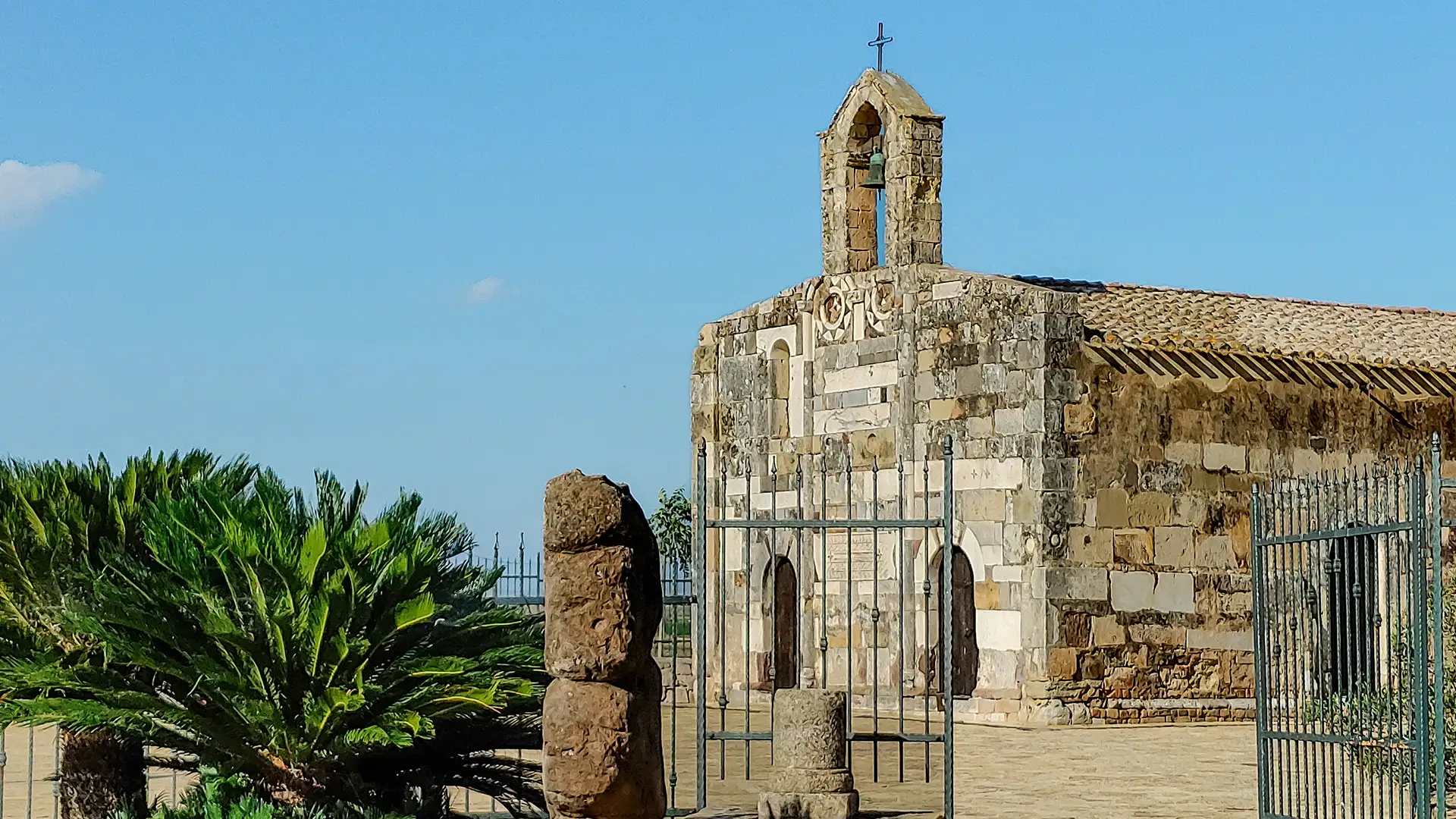
In the heart of Villaspeciosa, surrounded by the greenery of a charming park, stands the Church of San Platano (Saint Platano): a small masterpiece of Romanesque architecture with an extraordinary distinction. It is the only religious building in the world dedicated to this African saint, brother of Sant’Antioco (Saint Antioco), patron saint of Sardinia.
Built in the first quarter of the 12th century by the Benedictine monks of the Abbey of Saint-Victor in Marseille, the church is a valuable example of the blending of French and Pisan Romanesque art.
An architectural heritage of inestimable value
The building stands out for its limestone structure, brought from the hills of Cagliari, and for its rich decorative features made with reused marble from the ancient church of San Cromazio, an important Roman and early Christian archaeological site.
The façade: a mosaic of history
La facciata “a capanna” è sormontata da un elegante campanile a vela. Ciò che la rende unica è la straordinaria policromia ottenuta attraverso la giustapposizione di materiali diversi: calcare, calcoscisti, trachiti e porfidi si mescolano con frammenti marmorei secondo il gusto tipicamente sardo. Al centro spicca una lastra marmorea rettangolare, originariamente un architrave romano, decorata con eleganti intrecci in stile bizantino. Sopra, due ruote intarsiate geometricamente completano la decorazione. Sono ancora visibili gli incavi che ospitavano maioliche di derivazione araba.
L’interno: architettura e spiritualità
L’aula rettangolare presenta una rara configurazione a due navate, separate da arcate sostenute da colonne romane reimpiegate. Le navate si concludono con absidi semicircolari, soluzione che trova pochi esempi in Sardegna. L’altare è collocato nella navata sud, mentre nella navata nord spiccano le statue dei “fratelli” Platano e Antioco, venerati dalla comunità locale.
San Platano: history and legend
The story of San Platano has been handed down through the goccius, ancient Sardinian liturgical chants. According to legend, the two brothers were doctors from Mauritania, educated in Christianity despite the opposition of their pagan father. During the persecutions under Emperor Hadrian, they were arrested and tortured, yet miraculously resisted. When thrown to the lions, the animals licked them; when abandoned on a raft, they were shipwrecked on the coast of Sardinia, landing on the island of Sant’Antioco. Tradition says that Platano was later taken back to Rome, where he was martyred, while Antioco died in prayer in his cave near Sulci.
La leggenda della “Palla di San Platano”
Until 1955, the church housed a cannonball known as sa boccia de Santu Padrimu, venerata dal popolo che le attribuiva virtù terapeutiche contro i dolori di artrosi. La tradizione vuole che fu trafugata dai paesani di Uta.
The feast of San Platano
During the week of the last Sunday in August, Villaspeciosa celebrates the feast in honour of San Platano, Sant’Antioco, and Santa Rosa (Saint Rose). The celebrations begin on Tuesday, known as su martisi de su pani, and end the following Tuesday, with a programme rich in ancient rituals. On Friday, known as Sa di de S’Abiu, a procession of tractors loaded with timber takes place to build su stabi, the covering that shelters the faithful from the summer heat.
On Sunday, San Platano is celebrated with the procession and the goccius de Santu Padrimu, followed by Holy Mass. Monday is dedicated to Sant’Antioco, while Tuesday is dedicated to Santa Rosa.
During the feast, the church is open to visitors.
Visitor information
Opening hours: The church is generally closed. To arrange a visit, please contact the Municipality of Villaspeciosa.
Recommended period: The last week of August, during the Feast of San Platano, from 25 August to 1 September 2026.
Is something wrong with this point of interest? Send us a report.